By Rabbi Eddie Shostak & Israel Altman
Pesach 5786
A Night of Questions: The Power of Inquiry in Torah and Life
Jewish life is defined by questions. From our earliest traditions, asking questions has been the gateway to learning, growth, and connection. Nowhere is this more evident than on the night of the Seder. As we settle around the table, a child is placed in the spotlight to ask, Mah Nishtana?—“Why is this night different from all other nights?” And as the evening draws to a close, we join together in unison to ask, Echad Mi Yodea?—“Who knows one?” This ritual highlights a fundamental truth: Judaism thrives on inquiry.
Yet not all questions are equal. Some foster connection, understanding, and spiritual growth, while others can create distance, doubt, or even disintegration. In Torah study, the questions we ask shape how we relate to the text, to each other, and to Hashem. Consider questions like, “Why does the Torah emphasize loving your neighbor as yourself?” or “What can we learn from Yosef’s resilience in Egypt?” These inquiries invite reflection, moral insight, and practical application, allowing the Torah to resonate deeply in our daily lives. By contrast, questions asked with cynicism or resentment—“Why should we follow these outdated laws?” or “Is Torah really relevant today?”—can foster alienation and spiritual disengagement. The challenge lies in cultivating the art of asking questions that illuminate, inspire, and connect us to the eternal wisdom of Torah.
Rav Hutner teaches that just as the Wicked Son uses the word lachem—“to you”—in his question for which he is criticized, the Wise Son uses similar language Etchem–”you”. The distinction lies not in the words themselves but in the tone, intention, and openness behind the question. Only a question genuinely asked as a question contributes to the fulfillment of the commandment to discuss the Exodus on seder night.
A genuine question presupposes a relationship; it implies a desire to understand and engage. The Wicked Son weaponizes his question, seeking confrontation rather than connection. In contrast, the Wise Son’s inquiry builds bridges, deepens understanding, and fulfills the mitzvah of the night.
Modern research confirms the value of questioning in human development. In A More Beautiful Question, Warren Berger notes that children naturally ask thousands of questions, but social pressures often suppress this curiosity in adolescence. Those who retain the ability to ask thoughtful, probing questions become innovators, problem-solvers, and learners for life.
At the Seder, questions serve a similar purpose: to cultivate curiosity, to invite learning, and to awaken the freedom to explore, probe, and grow.
Chazal teach, “Who is wise? He who learns from all people” (Avot 4:1). The Talmud praises the student willing to humble himself, to ask “stupid” questions, knowing that such humility leads to elevated understanding (Brachot 63b). Rav Yehuda HaLevi likens the Jewish people to a symphony: every instrument, every voice, every perspective is essential. The Kabbalists teach that each Jew represents a single letter of Torah; missing a letter invalidates the whole. Each question, each voice, is critical and contributes to the richness of the collective wisdom of Israel.
In Jewish life and at the Seder table, we are all hungry for answers. But the first step toward understanding is the courage to ask good questions—questions that open our hearts, connect us to each other, and bring us closer to Hashem. True freedom and nation building, as the Seder demonstrates, is not only the capacity to answer but the capacity to inquire, reflect, and grow.
Chanukah 5785
In honour of the 2nd yahrzeit of my dear father-in-law, Avraham Katzman, z”l
(Avraham Moshe ben Shlomo Zev HaKohen, z”l)
25 Kislev – 1st day of Chanukah
As the darkness of night sets in, it is precisely then that we light our Chanukah candles and then that the light of Chanukah holds its most profound power.
Our joy remains understandably dimmed with our hearts still heavy with the knowledge that over 100 hostages still need to come home. And our strength and resilience continues to grow as we continue to stand strong, against all odds, while the world seeks to extinguish us.
The holiday of Chanukah has had a curious evolution. Chazal didn’t seem to make too big of a deal about Chanukah celebrations – some dairy food and enhanced meals to celebrate the inauguration of a newly built altar in the Temple in Jerusalem, but no direction full out celebrations.
Rabbi Tzvi Elimelekh Shapira of Dinov, the great 19th century chassidic master, known as the Bnei Yissaschar, adds to this mystery asking why is Chanukah mentioned only sparingly in the gemara and only once in passing and as an aside in the Zohar HaKadosh, while there are fully dedicated masechtot for Purim and the other holidays?
He answers (Bnei Yissaschar Kislev 2:21) that in the times of Chazal, they wanted to intentionally conceal and hide the idea of Chanukah because it was only meant to be revealed in our generation, the generation of the first phase of the End of Days called ‘Ikveta d’Mashicha’. And so Chanukah was somewhat more ‘low key’ in previous generations.
He explains further that that hidden light of Chanukah draws its light from the light of the future, the light of ultimate redemption, which is yet to be fully revealed. And so as we get closer to redemption, the light of Chanukah begins to shine brighter.
This is the reason why Chunukah was not made into a “big deal” in previous generations. Today though, with the extravagance of Chanukah celebrations, proliferation of public menorah lightings, mass availability of Chanukah essentials, sefarim and merchandise, wide assortments of decadent gourmet sufganiyot and more, the light of Chanukah has never shone brighter.
The root of the word Chanukah is chinuch, which means initiation, inauguration, re-dedication – the power of beginning. Chanukah is a time of our initiation, inauguration and re-dedication to living with the light of redemption that will arrive, B’H, soon in our days.
Chanukah is not only about remembering past miracles, but to show gratitude for the miracles of our day – בימים ההם בזמן הזה – and connecting to the brightest of futures, which is now more immanent that ever.
As we bask in this light and strengthen this unwavering hope, let us pray for the safe return of the hostages, for the safe return of all our brave soldiers in good health, and the illumination of the entire world with Godliness, kindness and peace.
Chanukah Sameach!!

Dedication to Education
Rabbi Sacks shares a story about his father, an immigrant to Britain who had to leave school at a young age to help support his family. Walking home with his father from synagogue as a child he would question his father about Judaism. His father would give the same answer every time: “I never had a Jewish education, so I cannot answer your questions. But, one day you will have the education that I never had and when that will happen, you will teach me the answers to those questions.”
Sefer Malachi (3:23–24) tells us of the task of Eliyahu HaNavi, the herald of the ultimate redemption: “He will turn the hearts of the parents to their children, and the hearts of the children to their parents.”
Rabbi Moshe Alshich asks how we act in order to succeed in educating our children. He said: “It is what you love that your children will learn to love.” It is the way your life reflects your loves, those are the things that our children will absorb and eventually make their own.” Rabbi Sacks commented: “It is by reflecting our love for Jewish life and practice that our children will choose to commit to become engaged and enthusiastic Jews.”
Chanukah, is related to the word chanuch, meaning re-dedication, referring to the re-dedication of the Temple by the Maccabees. Chanukah is also related to the word chinuch, meaning education. On Chanukah we don’t celebrate the re-dedication of the Temple, a physical building, rather we celebrate the living embodiments of Judaism, namely our children.
As Rabbi Sacks said in Radical Then, Radical Now: “Moses realised that a people achieves immortality not by building temples or mausoleums, but by engraving their values on the hearts of their children, and they on theirs, and so on until the end of time.”
Chanukah Sameach
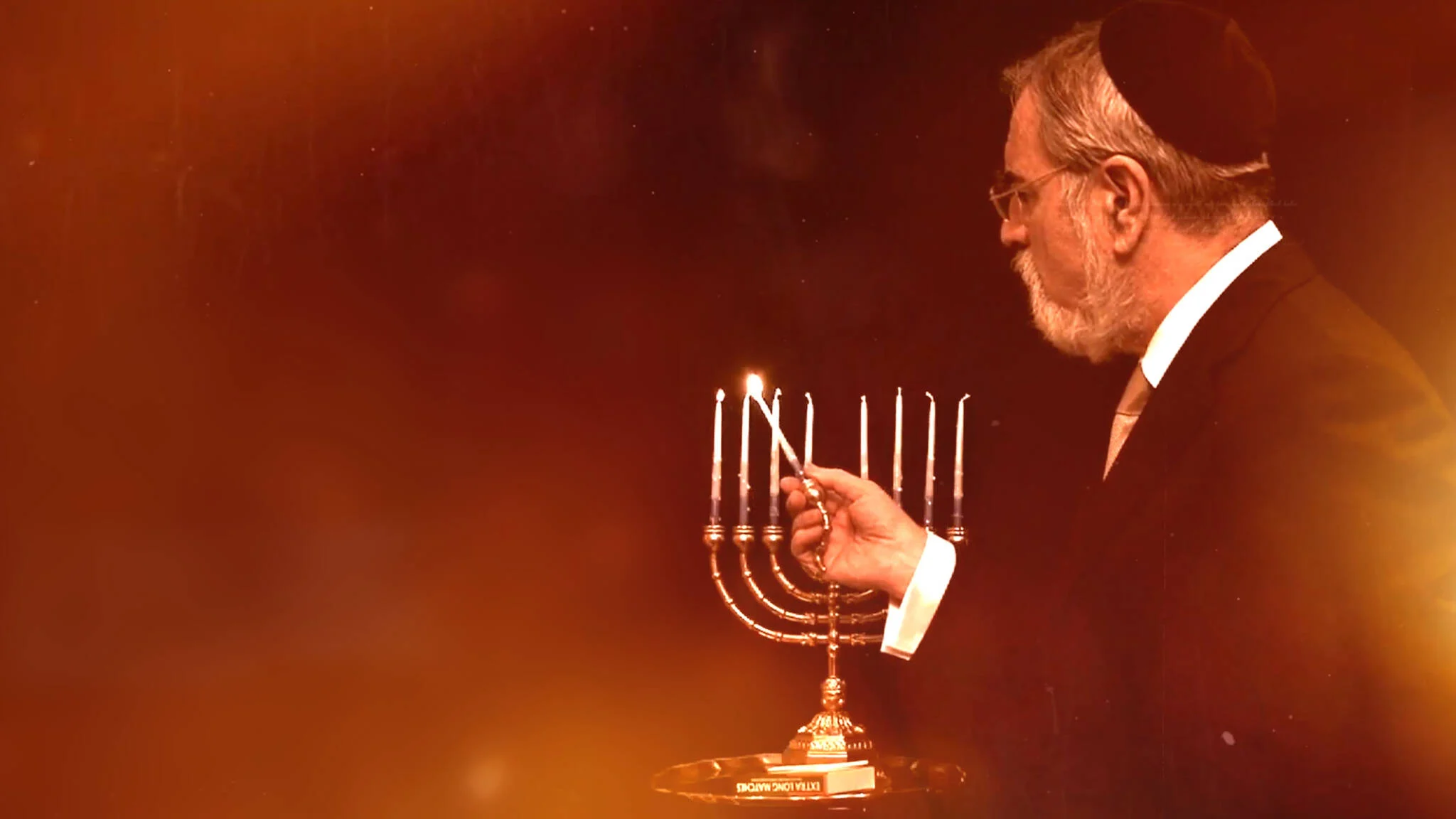
Fragments of Light – Chanukah insights from and inspired by Rabbi Lord Jonathan Sacks zt”l.
Launch of New Podcast on Parenting
Starting the 8th day of Chanukah 5781, you will receive a daily few minute WhatsApp voice note based on teachings from the Piaseczna Rebbi’s groundbreaking work Chovat HaTalmidim. We will begin with his introduction addressed to parents and educators and hope to complete it in time for Pesach 5781.
I look forward to beginning this conversation together with you, adapting these timeless chassidic teachings to our generation’s parenting and educational realities.
Join me for a “Conversation in Parenting”

A Tribute to Rabbi Sacks, zt”l
Shared at the Mizrachi Canada Memorial for Rabbi Sacks, zt”l – November 9, 2020
[TRANSCRIPT]
I am humbled at the opportunity to share some reflections on Rabbi Sacks, zt”l, in a moment where, as has been pointed out, the only one who would truly have the right words, would be Rabbi Sacks himself.
It is Rabbi Sacks who said describing Rav Soloveitchik, zt”l:
“Occasionally in the history of the Jewish encounter with God, a thinker arises who lets us see our ancient tradition in a new light, like a poet describing an emotion we instantly recognize but never before were able to articulate. When this happens within a faith, old texts reverberate with new meanings. Acts we had performed unthinkingly a thousand times stand revealed in their depth and power. As if for the first time, we begin to understand why those who came before us did as they did, and we and the tradition are renewed.”
These words seem strikingly applicable to the great thinker that was Rabbi Sacks, zt’l.
Entering into the almost prophetic world of Rabbi Sacks was like entering into a washing machine of the mind.
As we say daily in our prayers and translated by Rabbi Sacks in his siddur:
רַבּוֹת מַחֲשָׁבוֹת בְּלֶב אִישׁ – “Many are the intentions in a person’s mind,”
וַעֲצַת ה’ הִיא תָקוּם – “But the Lord’s plan prevails.”
With brilliance, eloquence and regalness, Rabbis Sacks shook our mind, scrubbed our thoughts, removing the smallness and pettiness that infested our heads. One then came out clean, re-focused on the most important priorities of our time —God’s priorities and God’s enduring plan.
What he was for the collective he was for the individual.
Just four and half years ago, on his last visit to Montreal, I had a serendipitous meeting with Rabbi Sacks. I was tasked to drive one of my greatest heroes from his hotel to his first speaking engagement.
This was a most transformative drive to say the least, as I have shared many times.
Among my missions on that drive, I aimed to ask Rabbi Sacks one good question. After some chit chat, which was hardly chit chat, I waited for my chance, careful not to interrupt his careful preparations and all while trying to keep my eyes on the road.
“Where can one make a greater impact,” I asked “in a day school or a synagogue?”
Rabbi Sacks paused, and answered in a way the only he could:
“Without question one can make the most impact on day schools, communities should have their primary focus on day schools, BUT in partnership with strong synagogues.”
Most would have seen it as a diplomatic answer, but as he unpacked his response asserting that shuls are where day school graduates are integrated into the community, and their strength will help determine the success of the day school experience, it was nothing close to a pareve answer.
After sharing a quote from Rav Hirsch and a personal anecdote to justify his position, the matter was settled.
At this critical juncture in my life, having my feet somewhat unsettled in both schools and shuls, it turned out to be an affirming and transformative car ride. One almost akin to his own encounters with the Lubavitcher Rebbe, that he has shared.
Today I realize there was so much more breadth and depth to his answer.
Did Rabbi Sacks truly believe one can make the most impact on day schools? I don’t know.
But, Rabbi Sacks was answering ME, he was clarifying MY intentions. He was somehow unbelievably sensitive to where I was, and was fully invested in me in that moment.
Perhaps if a shul Rabbi had asked, he would have answered differently. An author? A scholar? A philosopher? A physician? A simpleton?
When asked about his greatest achievement, Rabbi Sacks would point to the fact that he more than doubled the capacity of the Jewish Day School system in the UK during his tenure as Chief Rabbi.
Somehow I would not be surprised if someone had told me that it was a day school leader who had asked him the question.
Rabbi Sacks’ great accomplishments span wide realms –as a pulpit Rabbi, Chief Rabbi, a teacher, an author, a world faith leader, as a spouse a parent, a grandparent.
Because it wasn’t about him. It was about YOU and clarifying YOUR intentions. It was about the JEWISH PEOPLE and clarifying OUR intentions, it was about the WORLD and clarifying ITS intentions. It was ultimately about GOD’s priorities and GOD’s enduring plan.
On hearing the news of the passing of Rabbi Adin Steinsaltz, zt”l, not long ago, Rabbi Sacks said:
“…he had an unrivalled ability to convey religious truths even to very secular people. He was imaginative, humorous, unconventional but deeply spiritual. He was unique and we are now an orphaned generation.”
We have had the greatest privilege to live in the generation of Rabbi Sacks, losing him we have become further orphaned.
In a letter to the father of Reb Leibele Eiger, the Kotzker Rebbe wrote:
“Parents bring us into this world, teachers bring us to the next world.”
Rabbi Sacks was my teacher, Rabbi Sacks was a teacher of a generation.
To conclude in his own words:
“Teachers open our eyes to the world. They give us curiosity and confidence. They teach us to ask questions. They connect us to our past and future. They’re the guardians of our social heritage. We have lots of heroes today – sportsmen, supermodels, media personalities. They come, they have their fifteen minutes of fame, and they go. But the influence of good teachers stays with us. They are the people who really shape our life.”
What a privilege. What a loss. What a responsibility on us all.
יהי זכרו ברוך – May his memory be for an eternal blessing.
We Are Educators
(external link)
May 8, 2020 By eJP
(Published first by ejewishphilantrhopy)
Dearest Fellow Educators,
Over the last 6 weeks, like most, I have felt a whirlwind of emotion – from sadness, fear and grief to empathy, joy and hope. Sometimes these feelings are felt on their own, but usually they come all intertwined. Even though this is certainly normal for these extraordinary times, it doesn’t make it any easier.
A new emotion popped up recently – a feeling of guilt. While I am certainly grateful to still have a job, unemployment has been a critical mass casualty of this crisis. I watch as friends and colleagues face the most acute challenges of the pandemic with great courage and bravery – whether medical professionals on the frontlines, clergy performing unimaginable types of funerals, community volunteers bringing people who are isolated meals, and the like. And so I ask myself, what am I doing professionally? How am I contributing?
Are you, my colleagues, and I, sitting in the comfort of our homes, essentially asking young people to get off the couch and their screens, only to tell them to sit back on the couch and get on a screen? Are we a digital babysitting service for the young and a fancy means of keeping teens out of trouble? Are we “virtually” teaching or are we “actually” teaching?
But of course, while there is value and some truth to those aspects of our work, keeping the young busy so that the acute essential services can run smoother, we are doing and accomplishing much more than that. And I hope we are learning that ours are also essential services, albeit in a different way.
I worry deeply about the impact this crisis will have on our students, now and in the long term, on so many levels – spiritual, emotional, psychological, physical. My hope, of course, is that they, and we, all emerge healthy and safe, AND one foot taller – ever changed for the good.
I recently had a breakthrough discussion with our high school Seniors. Since the beginning we knew they would be the most intensely affected group from our student body. While they may sometimes mask and try to numb their distress, as they watch all of their most anticipated senior year events cancelled one by one, their heartbreak is there nonetheless.
We discussed the difference between maasim (deeds) and middot (character), in the context of study of Pirkei Avot (Ethics of the Fathers) – essentially the central Jewish character guide book. We spoke about the distinction between BEING Jewish and DOING Jewish.
While deeds and character may be interdependent, they are often mistakenly interchanged. For example, a person can perform a kind act (deed), but that doesn’t necessarily mean his kindness is refined (character). Similarly, a person can perform an unjust act (deed), but her sense of justice (character) can be quite upright. Who we are is not always analogous to what we do.
Together we re-discovered who the Seniors ARE. As painful as it is to have had senior trips cancelled, special events moved online, and other experiences remaining in limbo, that doesn’t change who they are. They are High School Seniors. That can only be refined, or, God forbid, can degenerate. What the Class of 2020 events and rituals look like may be influenced by COVID-19, but who they look like when they emerge as High School Graduates is up to them.
I believe this lesson is applicable to all aspects of our identity – whether as individuals, as a people, as parents, as children, as spouses, as professionals. It is especially important now.
Yes, our classrooms have moved to uncharted platforms, our textbooks are nowhere to be found. Our shared experiences have become almost unrecognizable: We have no Batei Midrash, no resource rooms, no libraries, no gymnasiums, no yards. We have been banished from our staff rooms, our offices and our common spaces. Our student-teacher interactions don’t look the same and clarity of what is to come seems ever elusive. Yet, we remain educators and it is very much in our hands to make our “virtual” schools very real.
We are still educators. That can only be refined, or, God forbid, can degenerate. What our teaching looks like may be influenced by COVID-19, but who we look like as educators when we emerge and when we return to our beloved schools is up to us.
In short, thank you for being you.
Thank you for your courage to show up and be part of society’s essential services, shepherding a generation of young people through these challenging times with professionalism and creativity, with care and compassion, with empathy and patience, so that they can emerge one foot taller from this extraordinary experience.
Thank you for being educators.
B’vracha (with blessing) ve’ahava (and love),
Eddie Shostak.